A BEGINNERS GUIDE TO TYPE CLASSIFICATION:
HUMANIST Sans Serif
HUMANIST Sans Serif
Contents:
- How Humanist Type Began
- Characteristics
- A Timeline of Humanist type
- Johnston
- Gill Sans
- Frutiger
- Eras
- FF Meta
- Verdana
- Calibri
- Open Sans
- BBC Reith
- Ghost
- Modern Britain
- Bibliography
How Humanist Type Began
Sans serif type, in print, first emerged in the 1800s. Yet it was only in the 1910s that a few standout sans serifs emerged begining the new age of simple un-furished type.
From Eric Gill (paedophile)’s (1927) and Edward Johnston (friend of paedophile)’s
  (1916), the design subcatagory of the humanist sans serifs emerged.
This design language went on to define the look of the web, accessible type, and of prestige British institutions.
From Eric Gill (paedophile)’s
(1927) and Edward Johnston (friend of paedophile)’s (1916), the design subcatagory of the humanist sans serifs emerged.This design language went on to define the look of the web, accessible type, and of prestige British institutions.
Characteristics
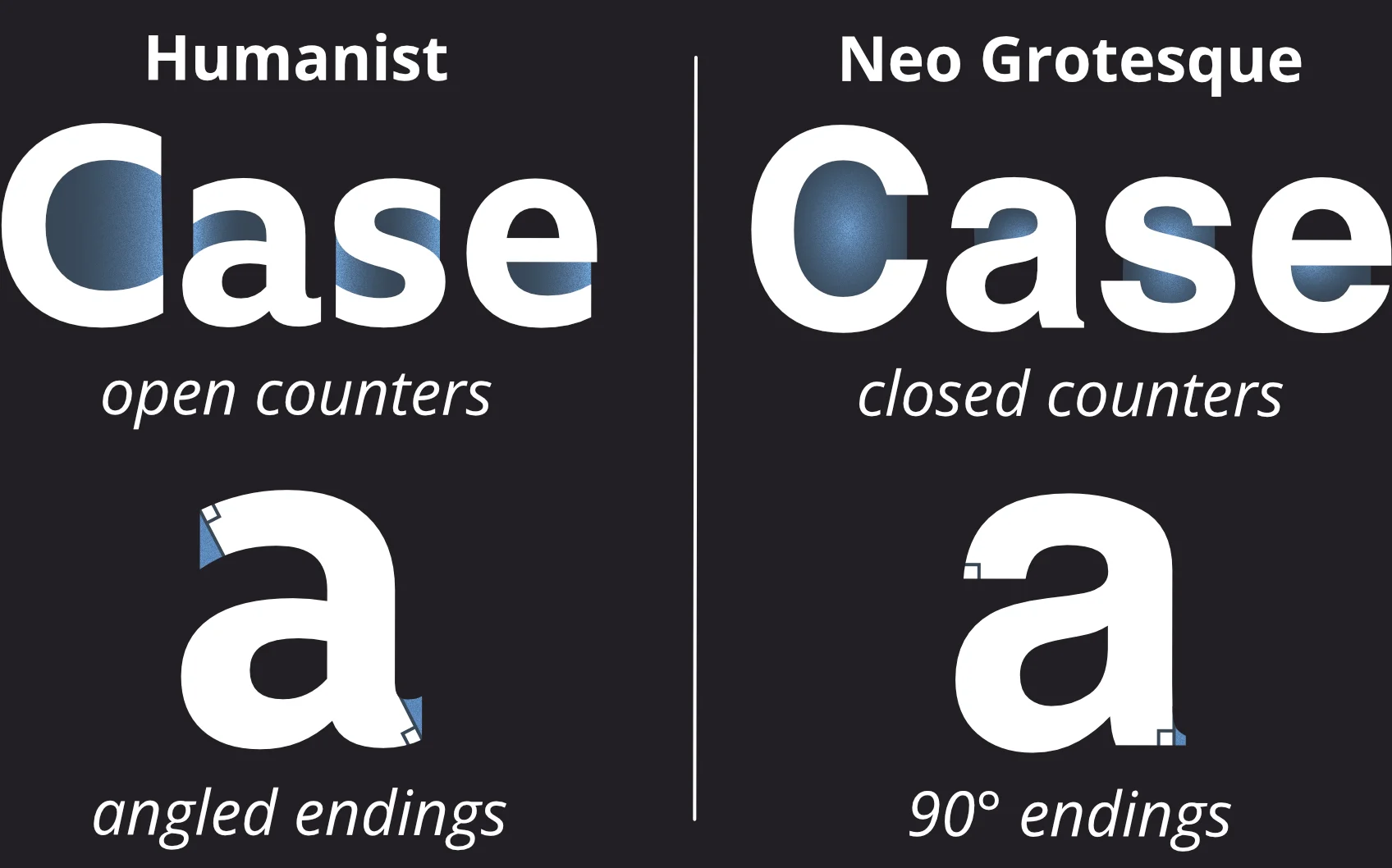
The key design features are the open counters, and angled endings.
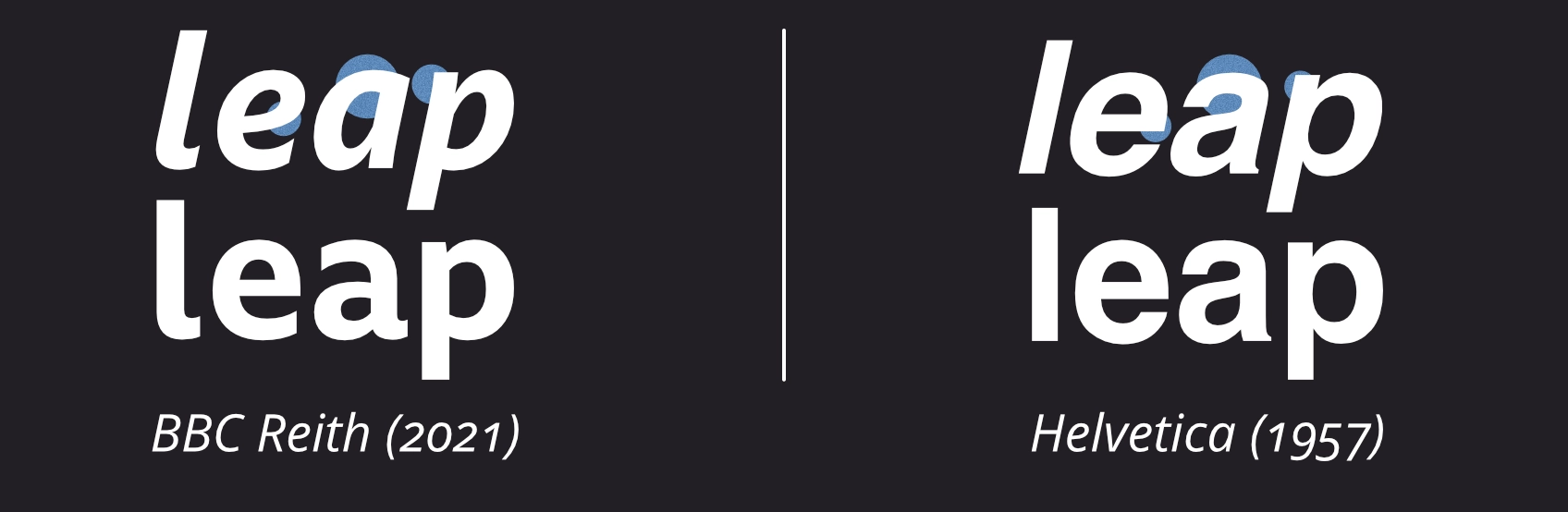
 The italic form of humanist type has a more fluid design taking inspiration from handwritten text.
A Timeline of Humanist Type
1916

Edward Johnston
Johnston proposed one of the first sans serif fit for high class professional use.
1928

Eric Gill
1976

Adrian Frutiger
1976

Albert Bolton, Albert Hollenstein
1976

Erik Spiekermann
Bundespost rejected it leading to Spiekermann releasing it later with his company FontFont. Meta’s humanist characteristics led it to its success when, packaged with the mac, Meta’s open counters perfect for avoiding the pitfalls of un-hinted down sampling allowed its ascent to a super-font of the early digital era.
1976

Matthew Carter
Due to the challenges of such a binary display, Verdana makes use of a suit of features: a heightened x-height, a gaping kern and humanistic wide open counters to prevent letters merging as well as a bold that is ~2x the weight of its book weight such that when at its smallest size, it’s still noticeable.
Verdana’s now also famous for “Verdana Gate” in which IKEA switched away from the traditional much loved Futura aim of uniting its print and web presence as Verdana was one of the few then “web-safe fonts”. These days IKEA use Noto IKEA an altered version of Noto Sans.